NailSafe · Guides
How to make nail-biting triggers visible without shame
A calm tracking method for noticing hands, situations and replacement actions when nail biting happens.
In this guide5
Track awareness before perfection
The first useful observation is often noticing your hand near your mouth. Count awareness moments as information, not as failures, because shame can make a habit harder to describe honestly.
Record the setting
Write down what you were doing, feeling or waiting for. Nail biting can appear during concentration, boredom, tension or transitions; the same visible habit can have different contexts.
Choose a discreet competing action
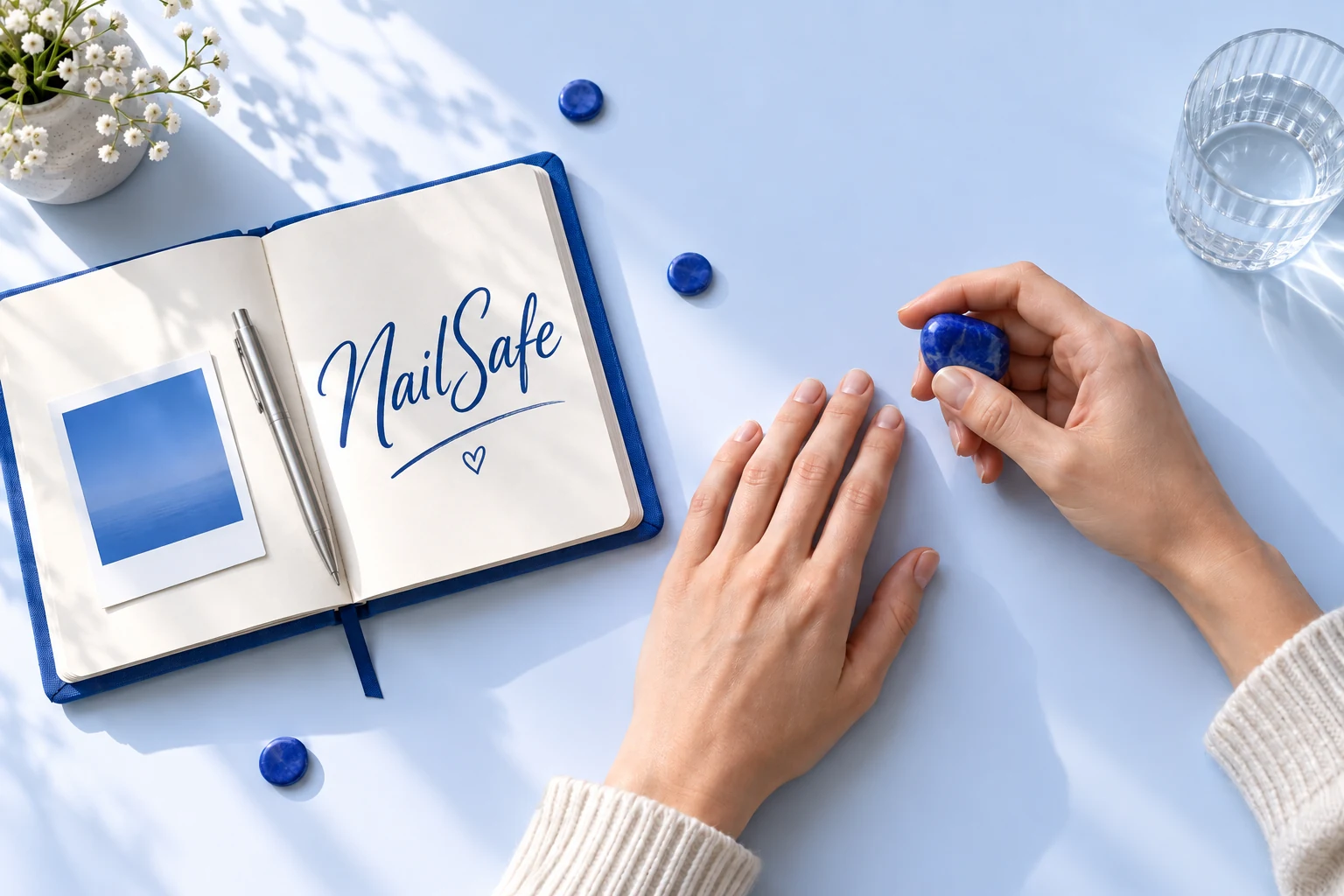
Keep one action ready that does not injure the skin: hold a smooth object, place both hands flat, make a gentle fist or use a fidget that suits you. The aim is to interrupt the automatic sequence.
Use photos as a record, not a judgement
Take pictures in similar light and distance if you want to compare changes. Do not turn one image into a verdict about health, attractiveness or success; healing and growth are not perfectly linear.
Know when to ask for help
Pain, bleeding, swelling, signs of infection or damage that does not settle deserve professional advice. If the habit feels impossible to control or causes distress, a clinician can discuss appropriate behavioural support.
Questions
Should I count every bite?
Start with the amount of tracking you can keep honestly. Awareness, context and what happened next are often more useful than a perfect total.
Do bitter nail products work for everyone?
No single product works for everyone, and products can irritate skin. Treat them as optional reminders, not as a complete plan.
When should I see a clinician?
Seek advice for pain, bleeding, swelling, infection signs or persistent damage, and whenever the habit causes significant distress.
Guides
How to track nail biting without chasing a streak
What to record and why, how a streak counter can work against you, using desk reminders deliberately, and how to read a week of entries into a plan.
Nail progress photos: how to take pictures you can actually compare
Why photographs beat memory for a slow-changing habit, how fast nails really grow, the setup that makes two pictures comparable, and why no date should be promised.
Habit reversal training: how the method works and what it is for
The four components of habit reversal training, why awareness comes first, what makes a competing response work, how the method was simplified over time, and what the evidence supports.
Why people bite their nails, and what the habit is really doing
Nail biting as a body-focused repetitive behaviour: what triggers it, why it feels useful, why it is so hard to notice, its physical consequences, and when it is worth seeing a professional.
How to stop biting your nails: the methods with evidence behind them
A step-by-step account of habit reversal training for nail biting, what a competing response is, what to change in your environment, and what to do after a slip.
Nail biting and anxiety: what the link really is
Is nail biting a sign of anxiety? What research says about stress, boredom and frustration, and what helps when tension keeps the habit going.
How long does it take for bitten nails to grow back?
Fingernail growth rates from research, why bitten nails can look uneven for months, what helps them recover, and when damage needs a doctor.
Bitter nail polish: does it work to stop nail biting?
What studies found when bitter nail polish was compared with a competing response, how to use it well, its real limits, and the safety points.
How to stop picking your cuticles and hangnails
Why cuticle and hangnail picking starts, the infection risk around the nail, practical steps to stop, and when picking is worth a professional.
Nail biting in children: a calm guide for parents
How common nail biting is in children, what tends to set it off, why nagging backfires, what actually helps, and when to talk to a doctor.
Is nail biting bad for you? The real health effects
What nail biting actually does to nails, skin, teeth and quality of life, which effects matter most, and which signs mean it is time to see a doctor.
Apps to stop biting your nails, compared
Habit trackers, awareness tools, bitter coatings and clinical programmes: what each approach actually does, what it cannot do, and how to check any of them before you install.