
Surv · Guides
An emergency kit inventory you will actually maintain
Why kits fail at maintenance rather than at assembly, how to build a list by walking through the box, what to record for each item, and how to run an annual review that takes under an hour.
In this guide15
Kits do not fail at assembly
Almost everyone who builds an emergency kit builds a good one. The failure comes later, silently, as batteries discharge and food passes its date and the medication in the box stops matching the prescription anyone in the house actually takes. Ready.gov's maintenance instruction is one line long and it is the line people skip: replace expired items as needed. An inventory exists to make that line happen.
Build the list by opening the box
Do not write the inventory from memory or from a checklist you found online. Sit next to the kit, take out one item at a time, record it, and put it back. This is slower and it is the only method that produces an accurate list. Every inventory built from a template contains things you do not own and omits things you do.
Four fields per item, and no more
Name, quantity, expiry date, and where it is. That is enough to answer every question you will ask the list: do I have it, how much, is it still good, and can I reach it. Adding purchase prices, brands and photos feels thorough and produces an inventory too heavy to update, which is the same as no inventory.
Expiry dates are the whole point
An item without a date does not need tracking, and an item with one does. Water that was not commercially bottled should be replaced every six months. Bottled water, canned food, medicines, batteries and chemical light sticks all lapse on their own schedules. Record the date on the item, not the date you think you bought it.
Group by category, not by container
Water, food, light and power, first aid, tools, sanitation, documents, clothing, and anything specific to your household. Categories make gaps visible in a way a flat list never does: an inventory of forty items reads as abundance until you sort it and see that sanitation has one entry. The categories in the Ready.gov list are a reasonable starting structure.
Record where things are, because they are not all together
Ready.gov suggests a kit in one or two easy-to-carry containers, and separate supplies in the car and at work. Once supplies exist in more than one place, location becomes information. A first aid kit you own but cannot name the location of is not part of your preparation.
Note what each item is for when it is not obvious
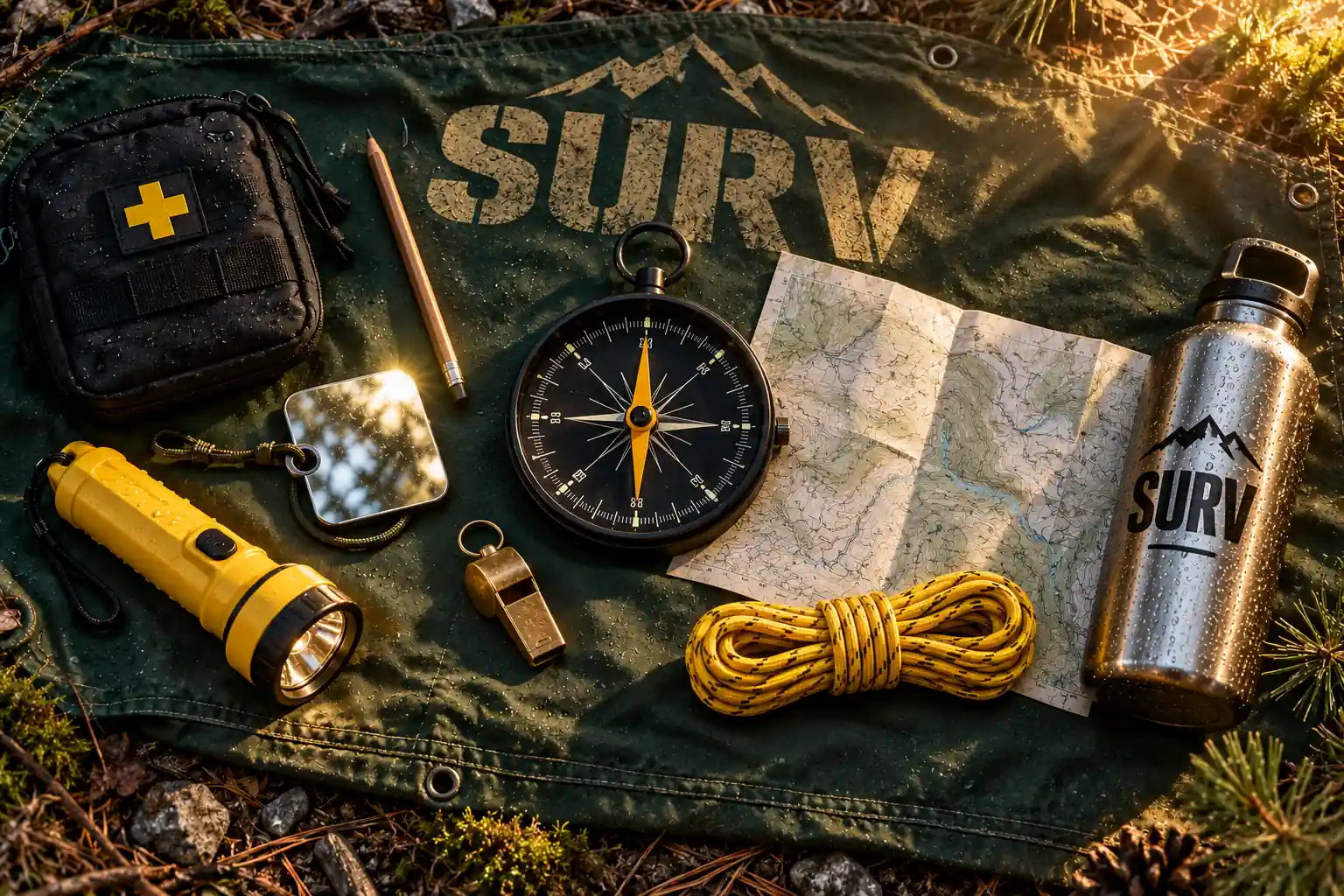
A wrench in an emergency kit is there to turn off utilities. Plastic sheeting and duct tape are there to shelter in place. A whistle is there to signal for help. Writing the purpose beside the unusual items means the person reading the list under stress, who may not be you, knows why the object is in the box.
Cover the people, not just the scenario
The additions Ready.gov lists separately are the ones that depend on who lives in your home: prescription medications, glasses and contact lens solution, infant formula and nappies, pet food and extra water for pets, and hygiene items. These are the entries most likely to be missing and the ones no generic checklist will prompt you about.
Documents belong in the inventory too
Copies of insurance policies, identification and bank records, kept electronically or in a waterproof portable container. These expire in their own way: policies get renewed, identity documents lapse, account details change. Treat a document's renewal date as an expiry date and it enters the same review cycle as the food.
Review annually, and put it in the calendar
Once a year, walk the kit item by item against the list. Replace expired food, water and medicine. Test the flashlight and replace batteries. Recharge any power bank. Update the documents. Confirm the medication still matches what people take. An hour once a year keeps a kit real, and a recurring calendar entry is what makes the hour happen.
Attach it to a date you already remember
Clock changes, a birthday, the start of a season. The review that gets done is the one attached to something else. A reminder floating on its own is dismissed and then forgotten, whereas one that arrives with an event you already act on inherits that event's reliability.
Store food and supplies properly between reviews
Keep canned food in a cool, dry place, and store boxed food in tightly closed plastic or metal containers. A garage that swings between freezing and hot shortens the life of everything in it, which quietly makes your recorded expiry dates optimistic. Where the kit lives affects how often the inventory is wrong.
An inventory is also a shopping list
The most useful side effect of maintaining the list is that replacement becomes ordinary. Items come up one or two at a time and get bought during a normal week, rather than as a single expensive rebuild when you finally open the box and find that most of it has lapsed at once.
What Surv does with the list
Surv keeps the inventory with expiry dates and can remind you before an item lapses, and it works without a network connection, which matters because an inventory you cannot open during an outage is not one. It knows nothing you have not entered, so the walk-through remains the first step and no app removes it.
What the inventory is not
A list of supplies is not a plan and not an emergency service. Surv is a reference tool. It does not know what is happening where you are, it does not contact anyone, and it does not replace the instructions of local authorities. In an emergency, follow those instructions.
Questions
What should I record for each item in an emergency kit?
Name, quantity, expiry date and location. Four fields answer every question you will ask the list, and anything more elaborate makes the inventory too heavy to keep updated.
How often should I review my emergency kit?
At least once a year, item by item. Replace expired food, water and medicine, test the flashlight, recharge power banks and update documents. Water that was not commercially bottled should be replaced every six months.
Why do emergency kits stop being useful?
Because maintenance is skipped, not because they were badly assembled. Batteries discharge, food passes its date, and medication stops matching what anyone in the house takes. An inventory exists to make the replacement step happen.
Should I build the list from a template?
No. Sit beside the kit and record one item at a time. Every inventory built from a template contains things you do not own and omits things you do.
Does an inventory app work without a network?
Surv keeps its inventory on the device and works offline, which matters because an inventory you cannot open during an outage is not one. It knows nothing you have not entered, so the physical walk-through is still the first step.
Further reading
Guides
Prepare your phone to be useful when the network is not there
What survives a network outage, why text beats calls when everyone is dialling, how to keep documents readable offline, and how to make a phone last when there is nothing to charge it with.
How to use a compass: bearings, maps and declination
The parts of a baseplate compass, how to take and follow a bearing, orient a map, correct for magnetic declination, and avoid readings disturbed by metal.
Offline emergency preparedness apps, compared
Alert apps, offline reference guides, checklist tools and paper: which ones still work when the network does not, and what to check before you need them.