
LarpGPT · Guides
Lighting keywords for AI photos: a practical glossary
Golden hour, blue hour, window light, backlight, low key and more: what each lighting term looks like in a photo and how to write it in an AI prompt.
In this guide14
Why lighting words matter more than style words
A photograph is a record of light, and the same subject in the same place looks completely different at noon, at dusk or under a single lamp. Lighting terms are useful in prompts because they describe physical conditions rather than taste. A model can do more with low sun from the left than with beautiful or cinematic, because the first tells it where shadows fall, how long they are and what colour the light carries. This glossary covers the terms that do the most work, with a plain description of each.
Hard light and soft light
Every lighting term below is a version of one distinction. Light from a small or distant source, such as direct sun or a bare bulb, is hard: sharp shadow edges, strong contrast, visible texture. Light from a large or diffused source, such as an overcast sky or a big window, is soft: gradual shadows, lower contrast, gentler surfaces. When you are unsure which lighting words to use, deciding between hard and soft first, and saying so, already narrows the result a great deal.
Golden hour
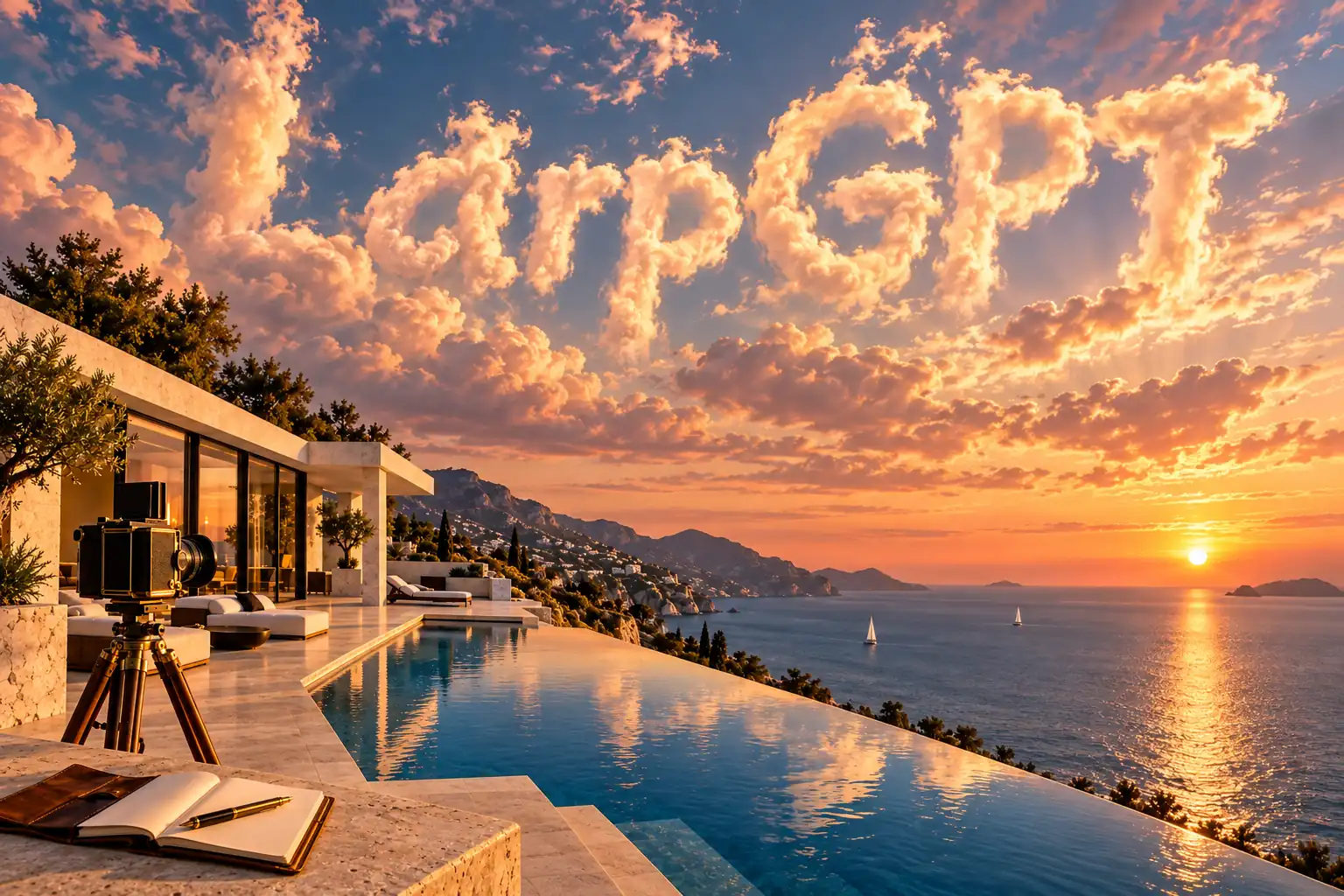
In photography, the golden hour is the period shortly after sunrise or before sunset when daylight is redder and softer than when the sun is higher in the sky. The low angle of the sun also produces longer shadows. It has no fixed duration; it varies with season and latitude. In a prompt, pair it with a direction: "golden hour, low warm sun from behind the subject" gives the model both the colour and the geometry, while golden hour alone leaves the direction to chance.
Blue hour
The blue hour is the part of twilight when the sun is below the horizon and the remaining indirect light takes on a blue shade, without sharp shadows. It is often associated with civil twilight, which the United States National Weather Service defines by the centre of the sun being up to six degrees below the horizon. In images, blue hour works best with artificial lights already switched on, because warm windows and street lamps against a blue sky create the contrast people recognise. Write both: "blue hour, warm lights in the windows".
Overcast light
An overcast sky acts as an enormous diffuser. Shadows are faint, colours are muted but even, and reflective surfaces show fewer hard highlights. It is the most forgiving light for people and products, and a good choice when you want an image to feel calm or documentary. Write "overcast sky, soft even daylight" rather than cloudy, which may add dramatic clouds to the sky without changing the light on the subject.
Hard midday sun
High sun produces short, dark shadows directly under objects and people, strong contrast and saturated colours. It can look harsh on faces, with shadows under the eyes and nose, but it suits architecture, graphic street scenes and summer beach images where bold shapes matter. If you want it, say it clearly: "harsh midday sun, short black shadows". If you do not, name a different time of day, because many generators default to bright, even daylight that belongs to no particular hour.
Window light
Window light is soft, directional and familiar, which makes it one of the most useful terms for interiors and portraits. The size of the window and the distance to it decide how soft it is. Specify the side it comes from: "soft window light from the left" produces a bright side and a gently shaded side, which gives faces and objects shape. Adding sheer curtains makes it softer still; adding direct sun through the glass turns it into hard light with sharp patterns on the floor.
Softbox and studio light
A softbox is a photographic light modifier that surrounds a lamp with reflective panels and a diffusing front, producing even, soft light. In prompts, studio softbox lighting usually signals clean product or portrait photography: smooth gradients, controlled reflections, a plain background. It suits objects and commercial images, and it can look artificial for scenes meant to feel spontaneous. For a lifestyle image in a real room, window light often reads as more natural than studio terms.
Main light, secondary light and backlight
Traditional three-point lighting uses a main light, often called the key light, which sets the overall look; a secondary light from another angle, called the fill light, which softens the shadows it creates; and a light from behind, called the backlight, which separates the subject from the background. You can describe these roles in plain words: a soft main light from the left, a weak reflection filling the shadow side, a bright edge of light along the hair from behind. Plain descriptions are often more reliable than the jargon.
Backlight and silhouettes
When the light source is behind the subject, facing the camera, the subject's edges glow and the front falls into shadow. A little backlight creates a bright outline around hair or the edge of an object; a lot of it produces a silhouette. Write the result you want: "strong backlight, the figure in silhouette against the sunset" or "soft backlight, a thin bright outline around the hair, the face still visible". Backlight also makes dust, mist and rain visible in the air, which adds depth.
Practical lights
In film and photography, practical lights are sources that appear in the scene itself: table lamps, neon signs, candles, car headlights, a lit shop window. They make night and interior images believable because the light has a visible origin. Name them as objects in the scene, "lit only by a green desk lamp and the glow of a laptop screen", and the model will usually place the light, colour and shadows where they belong. Mixed colours from several sources often look more realistic at night than a single even tone.
Low key and high key
Low-key lighting is a dark, high-contrast style in which most of the frame sits in shadow and only parts of the subject are lit; it is used for drama and, often, for product advertising. High-key lighting reduces the difference between light and shadow, producing a bright, even image largely free from dark shadows, often used to suggest an upbeat mood. In prompts, write the effect as well as the term: "low-key lighting, dark background, a single light from above" or "high-key, bright white background, almost no shadows".
Combining terms without contradiction
Two lighting terms that describe different physical situations will fight each other. Golden hour and harsh midday sun cannot both be true; overcast and sharp shadows contradict each other. Choose one main condition, then add at most one or two supporting details such as a practical light or a backlight. If a result looks confused, the prompt usually contains two lights that could not exist in the same place at the same time.
Where LarpGPT fits
LarpGPT is a library of photo prompts for travel, architecture, cars and lifestyle scenes, and every prompt includes a lighting decision alongside the subject, composition and lens. You can copy one, change only its lighting sentence using the terms above, and compare the results in the image generator you already use. LarpGPT does not generate images, and results vary between attempts.
Questions
What is the best lighting keyword for realistic AI photos?
There is no single best term. Decide first between hard and soft light, then name a source and a direction, such as soft window light from the left or low evening sun from behind. Direction matters as much as the term.
What is the difference between golden hour and blue hour?
Golden hour is shortly after sunrise or before sunset, when sunlight is redder and softer with long shadows. Blue hour is twilight with the sun below the horizon, when the light turns blue and shadows are no longer sharp.
What do low key and high key mean?
Low key is a dark, high-contrast style with most of the frame in shadow. High key is a bright, even style with few dark shadows. Describing the effect as well as the term makes the prompt more reliable.
Further reading
Guides
How to structure an AI photo prompt from scratch
A repeatable order for writing image prompts, what to put in each part, the common mistakes that flatten a result, and how to iterate so that each attempt teaches you something.
Six worked photo prompt examples, and why each line is there
Complete prompts for an architectural interior, a city moment, an object, a landscape, a food shot and a workspace, each broken down sentence by sentence so you can adapt them.
The anatomy of a photo-realistic image prompt
What each part of a prompt does inside an image generator, why one sentence per decision works better than a wall of adjectives, and how to adapt a prompt without breaking the thing that made it work.
Midjourney photorealistic prompts: a practical method
How to write Midjourney prompts that read as photographs: a camera-first structure, the documented parameters that help, and how to iterate.
ChatGPT image prompts for luxury photos that look real
How to prompt ChatGPT for believable luxury and lifestyle images: materials, light, restraint, worked examples, and care with brands and disclosure.
How to write AI prompts for realistic people
Describe believable people in AI images: posture, clothing, skin, hands and light, plus the consent, likeness and disclosure rules that come with it.
Negative prompts explained: when to use them, and how
What a negative prompt is, which image tools document one, how Midjourney's --no and Stable Diffusion's negative_prompt work, and why to use them sparingly.
Aspect ratios for AI images: how to choose and set them
Square, 3:2, 16:9 or vertical 9:16: how to pick an aspect ratio for an AI image, how composition changes with it, and how Midjourney and OpenAI set it.
How to write AI photo prompts that stay readable
A repeatable prompt structure for subject, light, lens language and constraints, with examples that are easier to refine.
AI image prompt tools, compared
Prompt libraries, prompt builders, in-generator assistants and writing it yourself: what each saves you, what each costs you, and which one teaches you anything.